
Originally published 22 October 2016. Updated 1 June 2026.
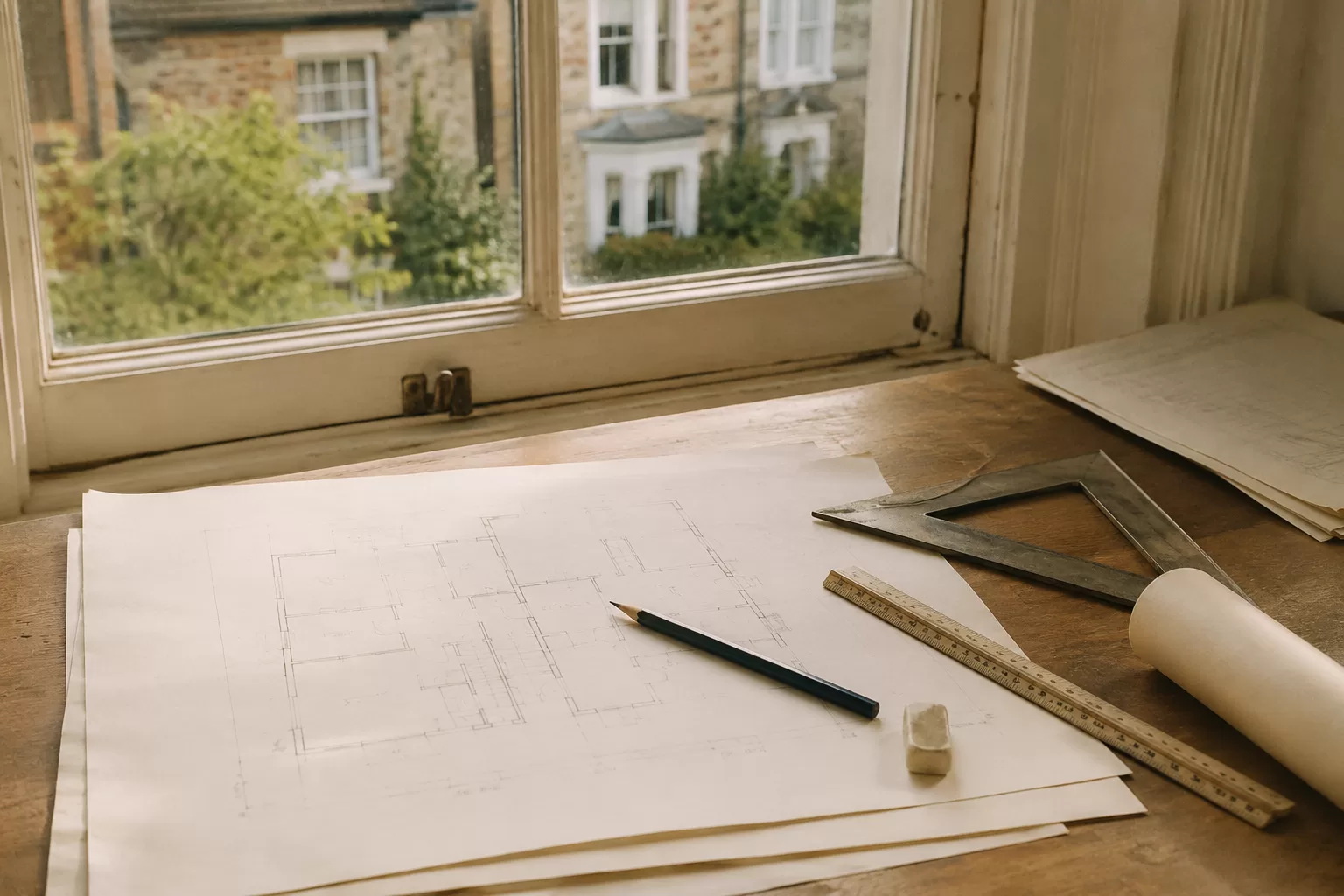
A lease plan is a drawing that sits alongside a lease document. It shows, in visual form, exactly what is included in the lease, what sits outside it, and which shared or access areas may also matter.
For a flat, apartment, house, shop, office or other leasehold property, the lease wording explains the legal position. The lease plan helps everyone see that position clearly on a drawing.
Quick answer: A lease plan turns the lease wording into a clear visual plan. It helps solicitors, conveyancers, leaseholders, freeholders and HM Land Registry understand what is being leased, where it sits, and how it relates to the surrounding building or land.
What does a lease plan usually show?
A good lease plan should make the property easy to understand at a glance. Depending on the property and the lease wording, it may show:
- the internal layout of the flat, apartment, house, shop, office or commercial unit
- the part of the property being leased, often shown by coloured edging, tinting or hatching
- shared or communal areas, such as hallways, stairs, entrances, paths or bin stores
- rights of way, access routes, parking spaces, gardens, balconies, roof terraces, lofts or storage areas where relevant
- the property’s position in relation to the surrounding building, road or wider site
- a location or site plan so the property can be related back to the Ordnance Survey map
The exact content depends on the lease, the property layout, and what the solicitor or conveyancer needs the plan to support.
What makes a lease plan Land Registry compliant?
For HM Land Registry purposes, the plan needs to be clear enough for the land or property to be identified accurately. In practice, a compliant lease plan will usually include:
- a stated metric scale, such as 1:100, 1:200, 1:500 or 1:1250, depending on the type of plan and the level of detail needed
- a north point, so the plan can be orientated correctly
- sufficient surrounding detail, such as nearby roads, boundaries, buildings or other features, so the property can be related to the Ordnance Survey map
- clear colouring, edging, hatching or stippling to show the relevant areas without obscuring the underlying plan detail
- a clear key explaining what each colour or marking means
- floor levels where needed, particularly for flats, maisonettes, roof spaces, basements, airspace or properties split over more than one level
- consistency with the lease wording, so the plan and the written description do not contradict each other
Useful way to think about it: a compliant lease plan is not just a nice floor plan. It is a legal support drawing. It needs to be clear, accurate, properly referenced and suitable for the purpose it is being used for.
Why old plans can cause problems
Many properties already have old lease plans, estate agent floor plans, architect drawings or photocopied deed plans. These can be useful starting points, but they are not always suitable for Land Registry use without redrawing or checking.
Common problems include:
- the plan is not drawn to a clear scale
- the plan has been photocopied or reduced so the scale is no longer reliable
- the plan is marked “for identification only”
- the colours or markings do not match the lease wording
- the plan does not show enough surrounding detail
- parking spaces, gardens, access routes, bin stores or other external areas are unclear
- the property layout has changed since the original plan was prepared
- thick edging or unclear colouring makes it difficult to identify the exact area
That does not mean an old plan is useless. It may provide helpful information. But it may need to be redrawn, updated or replaced before it can properly support a lease, lease extension, deed of variation, transfer or registration application.
When might you need a new lease plan?
You may need a new or updated lease plan if:
- a new lease is being granted
- an existing lease is being extended
- a freehold is being split into leasehold units
- a lease is being varied by a deed of variation
- a loft, roof terrace, garden, extension, parking space or other area needs to be added or clarified
- HM Land Registry has raised a question about the plan
- a solicitor has asked for a Land Registry compliant plan
- an old plan is unclear, missing, inaccurate or no longer reflects the property
If you are not sure whether you need a lease plan, title plan, transfer plan or deed of variation plan, the safest starting point is to send over what you have and explain what your solicitor has asked for.
Can a lease plan be prepared from existing drawings?
Often, yes. If you already have suitable scaled drawings, architect plans, estate agent floor plans or an old lease plan, it may be possible to prepare a compliant plan remotely.
This can be a quick and cost-effective route where the drawings are clear, accurate and show enough information. However, a measured site visit may be needed if the existing drawings are incomplete, the layout has changed, the external areas are unclear, or there is no reliable plan to work from.
You can read more about this service here: lease plans from existing drawings.
What should you send to get a lease plan?
To get a lease plan quote, it is helpful to send:
- the full property address, including postcode
- any existing lease plan, title plan, floor plan, architect drawing or estate agent plan
- lease wording or solicitor instructions, if available
- the title number, if known
- details of any areas that need to be shown, such as garden, parking, loft, roof terrace, bin store, access route or common parts
- whether the matter is urgent or linked to a transaction deadline
Not sure what to send? That is completely normal. A short explanation in plain English is usually enough to start with, especially if you can include the property address and any drawings you already have.
What happens after the plan is prepared?
The usual process is straightforward:
- You send the property details, drawings and any solicitor instructions.
- The information is reviewed to decide whether the plan can be prepared remotely or whether a site visit is needed.
- The lease plan is drafted in line with the relevant requirements.
- A draft is issued for checking.
- Any agreed amendments are made.
- The final PDF is supplied for solicitor, conveyancer or Land Registry use.
For a more detailed walkthrough, see our guide: How do I get a lease plan?
Why experience matters
Lease plans often look simple when they are finished, but the judgement behind them can be important. The plan needs to be clear, technically suitable and consistent with the legal wording. That is especially true where the property includes shared access, communal parts, different floor levels, gardens, parking spaces, roof terraces, loft areas or unusual boundaries.
An experienced plan provider can help reduce back-and-forth by spotting issues early, presenting the information clearly, and preparing a plan that solicitors and conveyancers can work with confidently.
Need advice on your lease plan?
If you need a new lease plan, need an old plan redrawn, or are not sure what type of plan your solicitor has asked for, we would be happy to help.
You can view our lease plan prices, see example plans, or request a quotation.
You can also call 0208 191 3945 or email email@leaseplansonline.co.uk.